Teaching
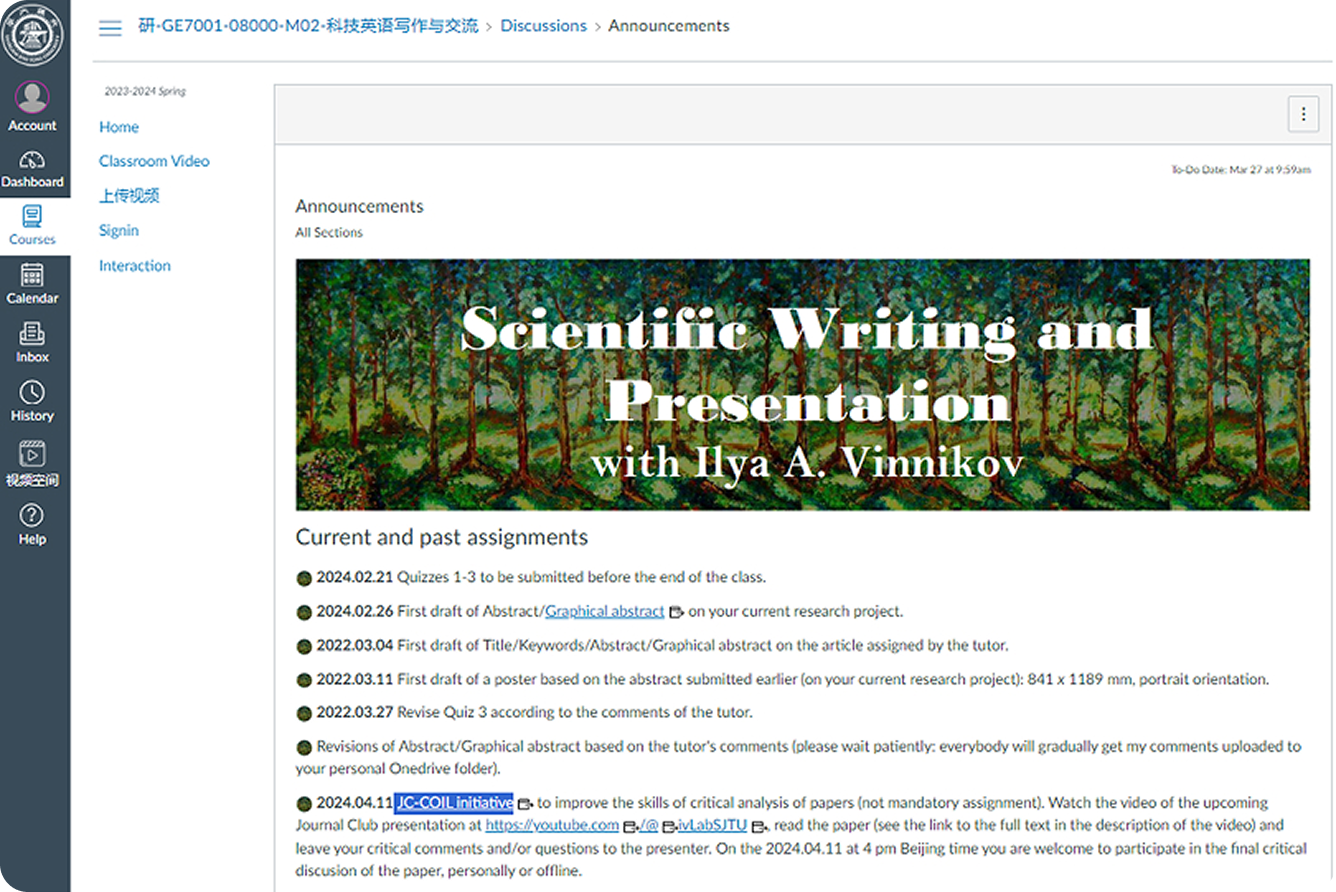
Summary of the course Scientific Writing and Presentation
Course description
A yearly 2-credit course, which benefited students who later won first places in poster competitions.
Scientific writing and presentation course specifically targets each student’s problems, discusses research philosophy, culture and integrity, provides step-by-step guidance on interacting with editors and reviewers, on awareness about predatory publishers, on drafting illustrations, on tweaks for easier search, on automating tasks, on rational use of large language models, on effective prompts for them, on appropriateness of using them to generate text and how to acknowledge them in the publications, on AI safety, on the use of reference managers.
Summary of the course Application of Viral Techniques and Introduction to Molecular Virology
Course description
In my lab, we effectively use state-of-the art viral-derived recombination techniques, lentiviral and adeno-associated virus vectors and recombinant bacterial anti-viral defense systems for in vitro and in vivo genetic models.
A new 32-hour course in SJTU Molecular Virology and Application of Viral Techniques, currently ranked as the second out of 45 courses in the College of Life Sciences, with the A1 evaluation grade by the students. It is focused on molecular mechanisms in viral infection, replication, transcription, translation, propagation as well as application of viral vectors, recombination techniques and other virus-derived tools in medicine, biotechnology and neuroscience. Students also learn about clinical characteristics of viruses, prevention and treatment strategies.
In this course, I also outline my thermodynamic definition of life, discuss evolution from cosmological to biological perspectives and beyond, focusing on dangers and perspectives of artificial intelligence, refer to cultural phenomena, such as masterpieces by J.S. Bach and Salvador Dalí, to illustrate interdisciplinary connections and evolutionary contexts in virology.
Both above-mentioned courses are ranked among the top five in my college, enjoy the A1 grades from the students and have been selected for the Global Virtual Classroom program: a prestigious offline/online platform that is not exclusive to Shanghai Jiao Tong University students, but also open for other Chinese and overseas universities.
JC-COIL initiative
Description
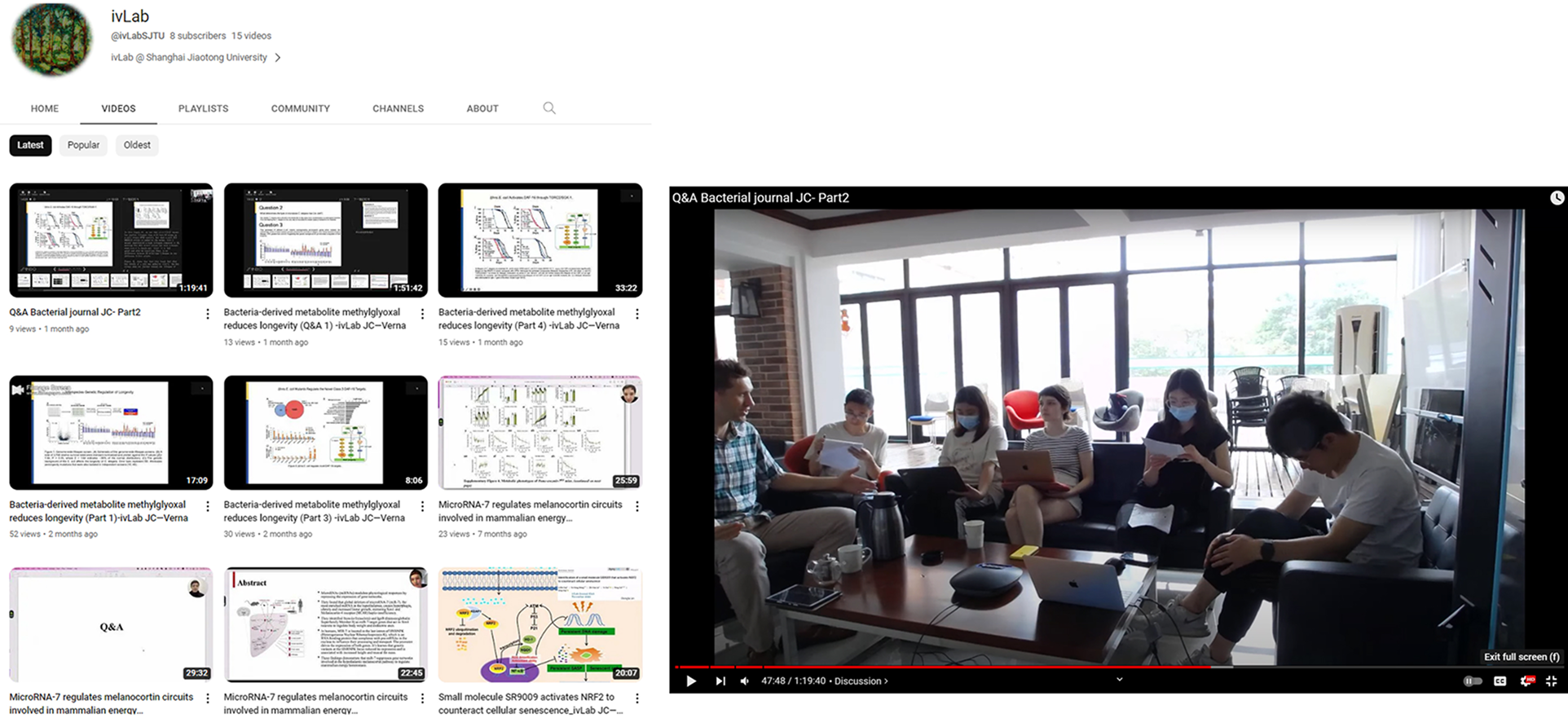
Collaborative Online International Learning-Journal Club (or simply JC-COIL) program is a novel model organized by my lab with the support of the Department of International affairs at SJTU. It consists of regular Journal Club meetings, where students of my Scientific writing and presentation course, researchers from my lab and a partnering labы from outside of China can engage in insightful discussions on topics of mutual interest.
A new 32-hour course in SJTU Molecular Virology and Application of Viral Techniques, currently ranked as the second out of 45 courses in the College of Life Sciences, with the A1 evaluation grade by the students. It is focused on molecular mechanisms in viral infection, replication, transcription, translation, propagation as well as application of viral vectors, recombination techniques and other virus-derived tools in medicine, biotechnology and neuroscience. Students also learn about clinical characteristics of viruses, prevention and treatment strategies.
The very nature of such collaborative meetings promoted fruitful discussions, engaged researchers into critical assessment of publications and stimulated deeper analysis of the research field, out-of-the-box thinking and exchange of novel ideas.
Successful PhD, MS, BS and PRP undergraduate program defenses of students from my lab demonstrate their scientific and academic devotion, fostered during their training period and strongly promoted by programs such as JC-COIL.